


Rare diseases constitute a broad category of disorders characterized by extremely low incidence rates. Globally, over 7,000 distinct types of rare diseases have been identified, approximately 80% of which are caused by genetic alterations; most of these are chronic conditions associated with high rates of disability and mortality. The World Health Organization (WHO) defines rare diseases as those affecting 0.65–1 per 1,000 individuals in the total population. Although the incidence rate of any single rare disease is low, the vast population base in China results in a substantial number of patients with rare diseases—a demographic group that continues to face persistent challenges, including diagnostic difficulties, limited therapeutic options, and inadequate access to medications.
In recent years, as the Chinese government has increasingly prioritized the field of rare diseases and has continuously refined relevant policies, clinical drug development for rare diseases has entered a phase of rapid growth. However, at the same time, there remains a substantial unmet clinical need for the diagnosis and treatment of rare diseases in China, and drug clinical development continues to face numerous challenges. This review systematically examines the current landscape of rare diseases in China, summarizes progress in clinical drug development, analyzes existing challenges, and draws on both domestic and international experiences to offer relevant insights, thereby providing a reference for advancing rare disease drug development in China and optimizing its research and development ecosystem.
(I) Overview of the Current Status of Rare Diseases in China
1.1 Disease Coverage and Patient Population Characteristics
Globally, there are over 7,000 known rare diseases; in China, through the successive publication of two batches of catalogs, 207 diseases have been included in the rare disease catalog, providing critical evidence for various government departments in formulating relevant policies. Among the 207 currently listed rare diseases, the majority are genetic disorders, while other types of rare diseases still require further communication and confirmation with drug regulatory authorities. With the implementation of numerous incentive measures, in 2024, China approved a total of 55 rare disease drugs for market release (excluding Category 4 chemical drugs), exceeding the 29 approvals in 2023, demonstrating an upward trend. Compared with international practices, China has not adopted specific prevalence rate criteria for rare disease designation, nor has it established a orphan drug designation system; instead, it employs a catalog-based management approach. This model better aligns with China's national conditions, characterized by relatively limited epidemiological data on rare diseases and a relatively late start in related regulatory efforts.
From the perspective of patient demographics, individuals with rare diseases are widely and dispersedly distributed across the population, yet there is a lack of precise epidemiological data to support this understanding. Internationally, it is estimated that up to 50% of patients with rare diseases are children, making rare diseases the most lethal childhood diseases globally; in China, this proportion is also roughly similar. Many pediatric patients develop symptoms shortly after birth, and without timely treatment, this can often lead to lifelong disabilities or even premature death. Furthermore, rare diseases are predominantly chronic conditions, requiring prolonged treatment and care. This not only imposes significant physical suffering on patients but also imposes a substantial economic burden on their families and society.
1.2 Current Status of Diagnosis, Treatment, and Medication Accessibility
China has established a national rare disease collaborative network to facilitate relatively centralized diagnosis and treatment for patients with rare diseases, along with a two-way referral system, thereby fully leveraging the radiating and driving effects of high-quality medical resources. Simultaneously, the country has implemented a rare disease case information registration system to collect data on the diagnosis, treatment, and geographical distribution of rare diseases in China. This system provides a scientific foundation for formulating population-based intervention strategies, optimizing the diagnosis and treatment service system, and enhancing drug accessibility. Nevertheless, the diagnosis and treatment of rare diseases in China still face challenges, including difficulties in diagnosis. Many rare diseases present with complex and atypical symptoms, making them easily confused with other diseases. Furthermore, primary healthcare institutions often lack specialized diagnostic and therapeutic capabilities, resulting in prolonged average time to definitive diagnosis for patients; some patients may even require several years to obtain a definitive diagnosis.
Insufficient drug accessibility remains another major challenge faced by patients with rare diseases in China. Globally, fewer than 10% of rare diseases have approved therapeutic drugs or treatment regimens, and China's situation is similar. For many years, rare diseases have not attracted the interest of biotechnology and pharmaceutical companies due to the exceptional difficulties in developing treatments for these conditions, the limited number of affected patients, and the fact that conventional blockbuster drug development models are unsuitable for rare diseases. However, in recent years, with increased policy support, this situation has gradually improved. By the end of 2023,165 rare disease drugs had been approved in China, covering 92 rare diseases; from 2020 to 2025, a total of 188 rare disease drugs were approved, and 503 clinical trials for rare disease drugs were registered, significantly expanding patients' access to therapeutic options.
(II) Progress in Clinical Development of Rare Disease Drugs in China
2.1 The scale of the R&D pipeline continues to expand
The activity in the development of drugs for rare diseases in China has been steadily increasing, with the number of drug development pipelines under investigation continuing to grow. As of the end of 2023, China had a total of 252 clinical trial pipelines in the clinical trial phase, among which 70 were in Phase III clinical trials; these pipelines collectively covered 40 rare diseases, with idiopathic pulmonary fibrosis, multiple sclerosis, melanoma, and glioblastoma accounting for the largest number of development pipelines. By 2025, the number of rare disease development pipelines in China is projected to exceed 300, with over 30% of them entering Phase III clinical trials, spanning a variety of conditions including hemophilia and myasthenia gravis. The distribution of these development pipelines exhibits a certain degree of concentration, primarily focusing on rare disease areas characterized by relatively high incidence rates and urgent clinical needs. Concurrently, the technological modalities of these pipelines are becoming increasingly diverse, evolving from traditional small-molecule drugs and biologics toward novel therapies such as gene therapy and cell therapy, thereby providing patients with rare diseases with a broader array of potential treatment options.
2.2 Significant increase in the number of approved drugs
With increased research and development investment and policy support, the approval rate of rare disease drugs in China has significantly accelerated. In 2018, the Center for Drug Evaluation included 28 rare disease drug registration applications in the priority review program; in 2023, a total of 45 rare disease drugs were approved throughout the year, among which 15 drugs were expedited to market via the priority review process, accounting for 33.3% of the total approvals. In 2025, there was even more explosive growth, with 48 rare disease drugs approved nationwide, covering areas such as neurological disorders, hematological diseases, and rare tumors, including 7 drugs that filled domestic gaps. Notably, among the 48 rare disease drugs approved in 2025,27 were new drugs, of which 12 were expedited through the priority review process, while 18 were approved via one-time review, representing nearly 67% of the total. This has provided a solid foundation for ensuring that patients with rare diseases in China can access medications faster, earlier, and better. Furthermore, the development of rare disease drugs is increasingly adopting a global synchronized approach—encompassing simultaneous research, simultaneous application, simultaneous review, and simultaneous market launch. Among the rare disease drugs approved in 2024 and 2025, nine varieties, including Afkate tablets and Namistat tablets, underwent this global synchronized process. Notably, four of these drugs were first approved in China worldwide, enabling patients with rare diseases in China to benefit from global innovative therapies in a prioritized manner.
Table 1. Selected pharmaceutical companies in the domestic rare disease sector
4.5 Insufficient utilization of patient experience data in clinical research and development
Patient experience data can reflect patients 'genuine perceptions and needs during their treatment journey, playing a crucial role in optimizing drug development strategies, as well as in evaluating drug efficacy and safety. However, in the current context of clinical drug development for rare diseases in China, the collection, analysis, and application of patient experience data remain in their early stages. The absence of well-established data collection mechanisms and evaluation frameworks has resulted in drug development efforts failing to adequately address patients' actual needs.
(V) Policy Recommendations to Advance Clinical Research and Development of Rare Disease Medications in China
5.1 Refine the "Rare Disease Catalog" and establish a orphan drug qualification certification system.
We will further expand the coverage of the "Rare Disease Catalog," accelerate its dynamic updates, and incorporate more rare diseases and rare clinical subtypes not yet included into the catalog, thereby enabling more patients with rare diseases to benefit from relevant policy support. Simultaneously, drawing on the experience of the U.S. Orphan Drug Designation program and adapting it to China's national circumstances, we will establish a domestic orphan drug designation system. This system will define clear criteria for orphan drug designation, standardized application procedures, and appropriate incentive measures, thereby encouraging pharmaceutical companies to engage in the development of rare disease drugs. Furthermore, we will strengthen the alignment between the Rare Disease Catalog, the medical insurance catalog, and pharmaceutical research and development policies. This includes incorporating rare disease drugs listed in the catalog into the scope of medical insurance coverage to reduce patients' medication costs, while providing pharmaceutical companies with incentives such as tax reductions and research funding, thereby enhancing their motivation to invest in drug development.
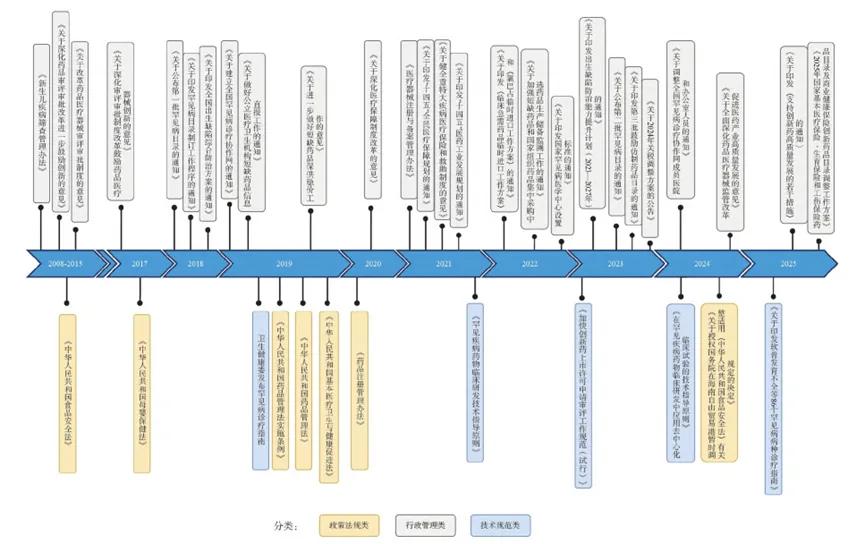
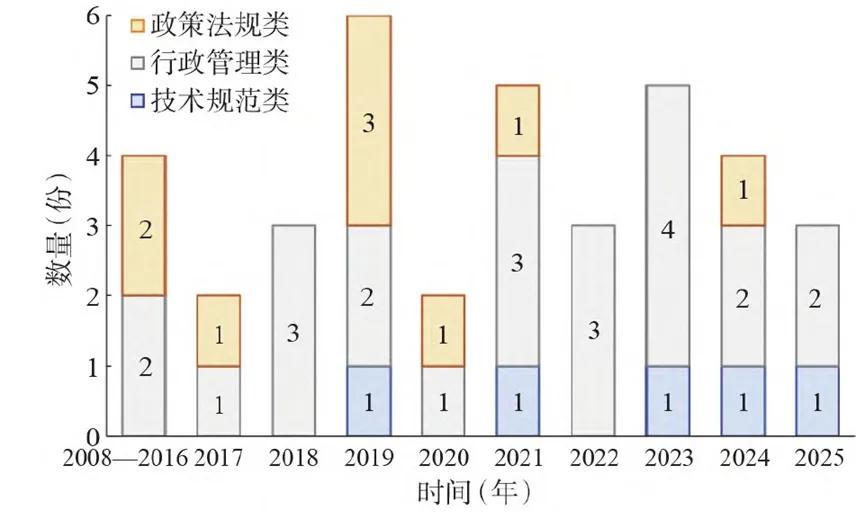
Figure 2. Temporal Distribution of Policies and Regulations Related to Rare Diseases in China from 2008 to 2025
5.2 Establish a joint development platform and database for rare disease drugs
By integrating resources from government agencies, enterprises, research institutions, and medical institutions, this initiative establishes a joint drug development platform for rare diseases. The platform enables resource sharing, leverages complementary strengths, reduces R&D costs, and enhances R&D efficiency. It can focus on key areas such as epidemiological research on rare diseases, natural history studies of these diseases, and clinical trial design, providing pharmaceutical companies with technical support and services. Concurrently, a comprehensive rare disease database will be established, integrating patient information, epidemiological data, natural history data, and clinical trial data, thereby facilitating data sharing and standardized management. Drawing on the experience of the U.S. RDCA-DAP platform, this initiative aims to promote the integration and standardization of rare disease data, streamline data retrieval processes, and deploy supporting analytical platforms to interpret data and facilitate drug development efforts, thereby providing a scientific foundation for drug research and development. Furthermore, patients with rare diseases are encouraged to share genetic data and family histories, supporting genetic research and advancing therapeutic technologies.
5.3 Strengthen research on the natural history of diseases and refine technical standards for research and development.
Increase investment in research on the natural history of rare diseases, and encourage collaboration among scientific research institutions, medical institutions, and pharmaceutical companies to conduct systematic studies on the natural history of these diseases. Such efforts will help elucidate the pathogenesis, disease progression, and prognosis of various rare diseases, thereby providing foundational support for drug development. Concurrently, accelerate the establishment of a technical standard framework for rare disease drug development by drawing on international best practices and adapting them to China's specific context. This includes formulating unified standards and guidelines for clinical trial design, efficacy evaluation metrics, and safety assessment, thereby enhancing the quality and efficiency of drug development. Additionally, strengthen the cultivation of specialized talent in rare disease research and development by establishing a dedicated talent training system to develop professionals proficient in clinical research, drug development, and regulatory review processes, ensuring a robust talent pipeline for rare disease drug development. Promote the application of emerging technologies, such as artificial intelligence (AI), in rare disease drug development, leveraging advanced platforms like DrugCLIP to accelerate the discovery of novel therapeutic targets and first-in-class drugs, thereby boosting overall R&D efficiency.
5.4 Application of Patient Experience Data in Clinical Development
Establish a comprehensive patient experience data collection mechanism—utilizing methods such as questionnaires, interviews, and follow-up surveys—to gather information on patients 'symptom improvement, quality of life, and adverse reactions during their treatment course. Develop a patient experience data evaluation framework, integrating these patient experience data into drug efficacy and safety assessments, thereby ensuring that drug development better aligns with patients' actual needs. Simultaneously, encourage patient participation in the drug development process by actively soliciting their opinions and suggestions, thereby enhancing patient engagement in drug development initiatives.
5.5 Optimize the capital support environment to facilitate the commercialization of research and development outcomes
Further optimize the capital support environment for rare disease drug development, encourage private capital and venture capital to invest in this field, increase support for early-stage research and development projects, and reduce the financing challenges faced by such projects. Simultaneously, refine mechanisms for translating research outcomes into practical applications, strengthen collaboration between pharmaceutical companies, research institutions, and healthcare facilities, accelerate the transformation of research achievements into clinically viable drugs, and enhance drug accessibility. Additionally, foster international cooperation and exchange, introduce advanced international research technologies and expertise, align China's rare disease drug development efforts with global standards, and encourage domestic pharmaceutical companies to conduct synchronized global research, thereby boosting the international competitiveness of China's rare disease drug development capabilities.
(VI) Summary
In summary, China's rare disease field faces substantial unmet clinical needs. Patients with rare diseases have long confronted challenges such as diagnostic difficulties and limited access to therapeutic agents. However, with sustained policy support from the state, continuous advancements in research and development technologies, and increasing capital investment, clinical drug development for rare diseases in China has entered a phase of rapid growth. The number of approved drugs has increased significantly, the pipeline of investigational drugs has diversified considerably, and technological approaches have become increasingly varied—all of which have brought new hope to patients with rare diseases. At the same time, it is crucial to recognize that this field still faces numerous challenges, including a lack of epidemiological data, high development costs, and inadequate technical standards. Moving forward, it is essential to further refine the "Rare Disease Catalog" and the orphan drug designation system, establish joint development platforms and databases for rare disease drugs, strengthen research on the natural history of these diseases and cultivate specialized talent, leverage patient experience data, optimize the capital support environment, and thereby foster sustained and healthy development of rare disease drug research and development in China, ultimately establishing a robust research and development ecosystem.
reference material:
[1] BAX BE. Biomarkers in Rare Diseases 2.0[J]. ,2022,23(9).DOI: 10.3390/ijms23094582.
[2] Center for Drug Evaluation, National Medical Products Administration. Annual Drug Evaluation Report 2024 [R]. 2025.
[3] FDA. Search Orphan Drug Designations and Approvals[DB /OL].[2026-03-24]. https://www.accessdata.fda.gov/scripts/opdlisting/oopd/index.cfm.
[4] Third Multidisciplinary Expert Workshop on the Definition of Rare Diseases/Orphan Drugs in China. Research Report on the Definition of Rare Diseases in China2021[R]. 2021.
[5] CHUNG CCY, HONG KONG GENOME P, CHU ATW, et al. Rare disease emerging as a global public health priority[J]. , 2022,10:1028545.DOI: 10.3389/fpubh.2022.1028545.
[6] Center for Orphan Drug Research and Development(CORD). How Patient Community Organizations Drive Drug Development: Global Experiences [EB/OL]. 2019.
About the Author: Ketty specializes in drug research and development, science popularization, as well as policy and strategic research within the pharmaceutical industry.
Disclaimer: This article is intended solely for the purpose of knowledge exchange, sharing, and popular science education; it does not constitute commercial promotion, nor should it be regarded as medical guidance or medication advice. If you encounter any infringement, please contact us for removal.
Recommended Products from Our Company:
1.188663-74-3 https://www.bicbiotech.com/product_detail.php?id=6567
2.13323-45-0 https://www.bicbiotech.com/product_detail.php?id=6568
3.1227160-35-1 https://www.bicbiotech.com/product_detail.php?id=6569
4.19103-54-9 https://www.bicbiotech.com/product_detail.php?id=6570
5.137787-08-7 https://www.bicbiotech.com/product_detail.php?id=6571

